Living on well water in Tonopah or the rural stretches west of Buckeye means your home is its own water utility. There is no city system to maintain pressure, treat the water, or take a call when something goes wrong, so understanding your equipment is not optional; it is how you keep water flowing.
Well-and-septic homes have plumbing needs that city-water homeowners never think about. Here is what matters most, from the pump that lifts your water to the treatment that makes it usable.
The Heart of the System: Pump and Pressure Tank
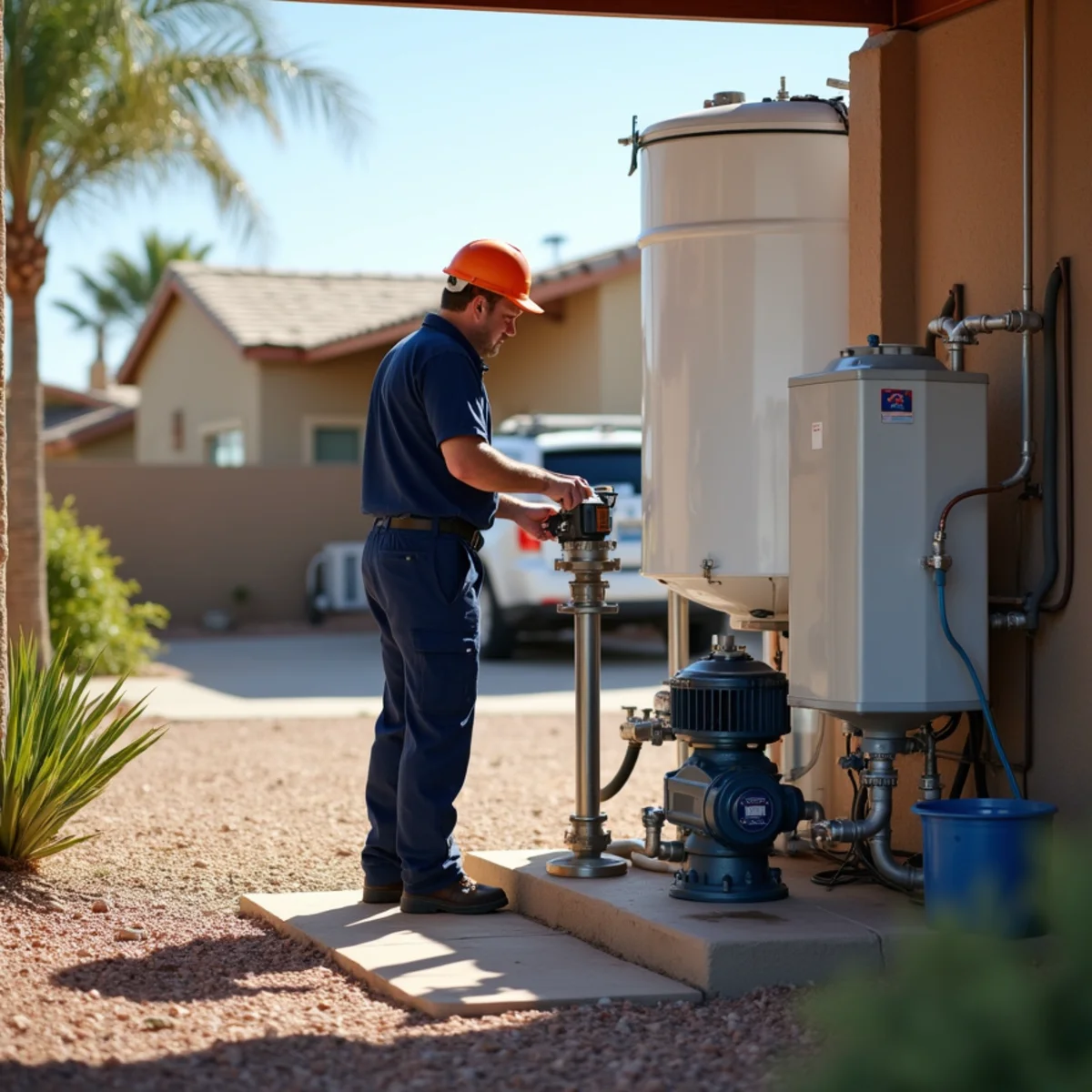
Two components define a well system. The pump, usually submerged deep in the well, lifts water to the surface, and the pressure tank stores it and maintains steady household pressure so the pump does not cycle on every time you open a tap. When either fails, you feel it immediately as lost pressure or no water at all.
A pressure tank that has lost its air charge makes the pump switch on and off rapidly, a condition called short cycling that burns out pumps early. Fluctuating pressure, sputtering faucets, or a pump that runs constantly are all signs the pump or tank needs attention before it fails outright.
Well Water Is Even Harder on Plumbing
Rural well water in this region is untreated groundwater, so it often carries even more minerals than treated city water, along with sediment, iron, and sometimes a sulfur smell. Hardness well beyond the 15 to 20 grains per gallon typical of city supply is common, and that mineral load scales pipes, stains fixtures, and wears out appliances quickly.
Because no municipal treatment stands between the aquifer and your tap, treatment at the home is essential rather than optional. What you install depends on what your specific well water contains, which is why testing comes first.
Treatment That Fits Your Water
A whole-home water softener handles hardness and protects your plumbing and appliances, and it is the foundation of most well-water treatment. Depending on the test results, you may also need a sediment filter to catch grit, an iron filter to stop rust staining, or additional filtration for odor.
For drinking water, a reverse osmosis system at the kitchen sink removes dissolved solids and improves taste. Madrid Plumbing provides water softener installation and treatment for rural Tonopah homes and can match the right combination to your well after a proper water assessment.
- Water softener for hardness and appliance protection
- Sediment filter for grit and fine particles
- Iron filter to prevent rust stains on fixtures
- Reverse osmosis at the sink for drinking water
Leaks Cost More on a Well
On city water, a hidden leak mostly costs money. On a well, it also costs pump life and electricity, because every leaked gallon is a gallon your pump had to lift and pressurize. A leak that runs continuously can keep the pump cycling around the clock, driving up your power bill and wearing out equipment.
That makes prompt leak detection especially valuable for rural homeowners. Finding and fixing a hidden leak protects not just your home but the pump and pressure system your entire water supply depends on.
Septic Awareness Goes With It
Most well homes are also on septic, which changes how you treat your drains. Harsh chemical drain cleaners can disrupt the bacteria a septic system relies on, and what you flush matters more than on a municipal sewer. Being mindful of water use also protects the drain field from overload.
If you are unsure what your rural property has or needs, an assessment sorts it out. A plumber experienced with wells and septic can evaluate the whole system, from pump to pressure tank to treatment to drainage, and tell you what needs service now and what to plan for.
Start With a Water Test
Everything about a well system starts with knowing what is in your water, because unlike city supply, no one is testing or treating it for you. A water test reveals hardness, iron, sediment, and any bacterial or chemical concerns, and those results dictate exactly what treatment your home needs rather than what a generic package assumes.
It is wise to test periodically, not just once, since well water can change over time with the aquifer, the seasons, and nearby land use. Rural homeowners in Tonopah and the surrounding area who test regularly catch problems early, size their treatment correctly, and avoid both over-treating and under-treating. Pair that testing with routine attention to the pump, pressure tank, and any filters, and a well system can serve a home reliably for many years. If you are ever unsure whether a symptom traces to the pump, the pressure tank, or the water quality itself, an experienced well-and-septic plumber can sort it out and tell you plainly what needs attention first and what can safely wait.
How Madrid Plumbing Can Help
Frequently Asked Questions
A well home relies on a pump and pressure tank to supply and pressurize water, plus its own treatment since there is no municipal system. It typically needs a softener and often sediment or iron filtration, matched to the specific well water after testing.
Common causes are a waterlogged or failed pressure tank, a hidden leak somewhere in the system, or a failing pump. Constant running or rapid cycling wears out the pump quickly, so it should be diagnosed promptly to avoid a costly failure.
Yes, almost always. Untreated well water is often very hard and can carry sediment, iron, and odor. A water test determines exactly what treatment you need, but some combination of softening and filtration is standard for protecting a rural home plumbing system.